Kinetics & Electronics Classes
The possibilities of integrating movement and sound with artwork are endless: wind-powered mobiles, motorized robots, art cars, flaming sculptures, and more. The Kinetics & Electronics department focuses on mechanical and electronics-based movement to help you create dynamic and interactive artwork. Whether you want to create large-scale Rube Goldberg contraptions or tiny robots that literally have minds of their own, these classes will help you take your creations to the next level. Learn about motors, how to program microchips, where to find components, and how to (safely) set your work on fire!
Adult Classes
The Crucible offers a wide variety of adult classes teaching different kinetics and electronics techniques. Whether you want to learn the fundamentals of electromechanics or how to create luminous LED projects, The Crucible has you covered. See the complete list of kinetics and electronics classes offered below.
Arduino Microcontrollers: Building Smart Art
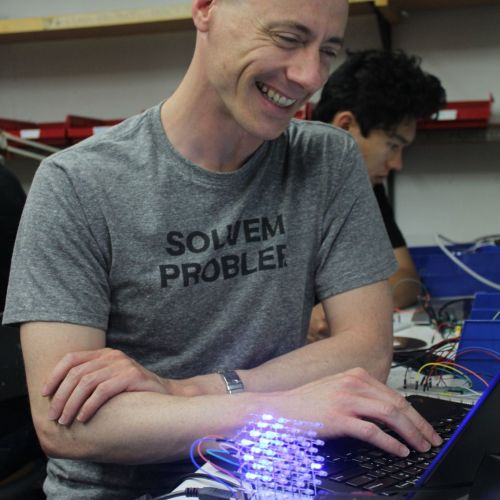
Arduino is an open-source electronics platform based on flexible, easy-to-use hardware and software. It is perfect for artists, designers, hobbyists, and anyone interested in making intelligent creations that can sense and act in the real world. The types of sensors and actuators possible are nearly limitless! Starting with the basics, we thoroughly review Arduino’s hardware and software features. Plenty of hands-on lab time deepens your understanding and enables you to create interactions of your own. An Arduino board and accessories are provided and students take home all components that are part of their final project. NOTE: A laptop computer is required.
Demystifying the LED
Learn about light emitting diodes (LEDs) and the basic circuits needed to make them work, then create luminous one-of-a-kind projects. LEDs are efficient, inexpensive, and long lasting. They vary in color, shape, intensity, and size. Students receive a complete kit of LEDs and parts to use in class and for future projects.
Digital Fabrication and Foundry
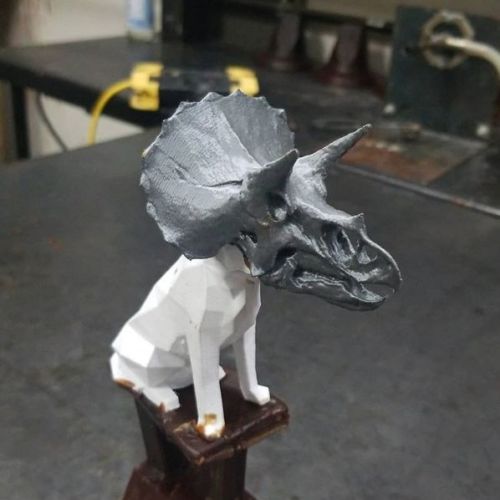
In this two-part course, you will be introduced to digital design and 3-D printing using Autodesk Fusion 360 with the goal of producing a number of pieces suitable for casting in aluminum. These designs will be 3-D printed using resin, PLA, and CNC milling. With input from the instructor, you will select one of your prints to cast into aluminum using the ceramic shell process. There is an additional cost for larger pieces or to cast in bronze.
Electromechanics for Everything
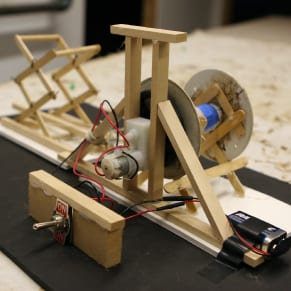
Use the simplest of electronic and mechanical components to make things spin, twitch, jump, bend, and wiggle. This class covers switches, buttons, relays, motors, servos, and solenoids. We will also explore some basic analog and digital control circuits, AC/DC current, and safety. The techniques taught in this class can be applied to almost any kind of project.
Mechanical Sculpture
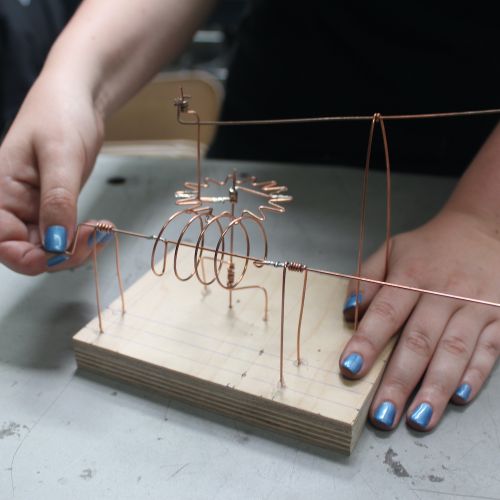
Learn how to make your creations move! This course introduces simple and complex mechanisms including gears, cams, pulleys, and linkages. You will learn how to create, convert, and control movement, along with combining these elements to get the complex motion you desire. Hands-on lab time using foam board, plastic, and wood deepen your understanding of these concepts, which you can apply to other materials. Personal projects and interests are welcomed and encouraged.
Youth Classes
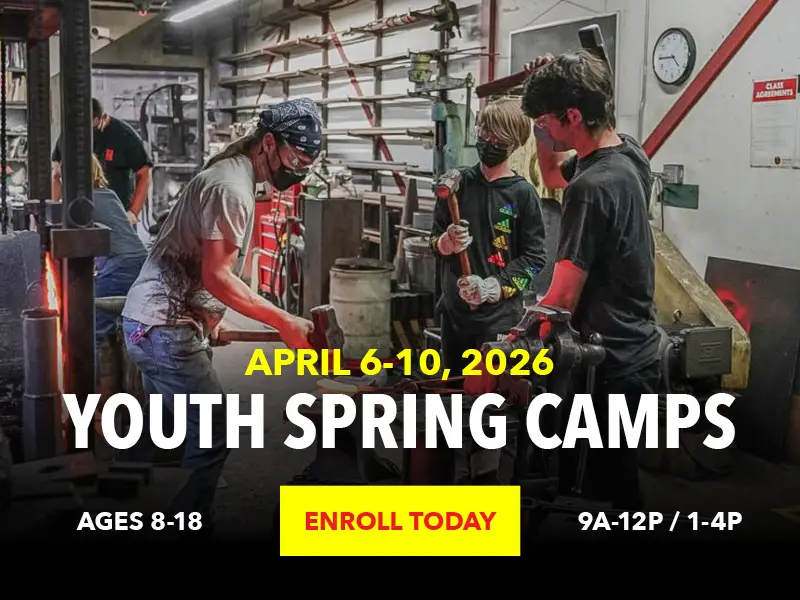
In the Kinetics & Electronics Department, we offer youth classes specifically for ages 8-11 and 12-18. In these classes, The Crucible provides a unique setting for youth to get hands-on with kinetics and electronics, exploring their creative voices and absorbing real-life lessons in science, technology, engineering, and math. You can see all The Crucible’s offerings for youth here.
Youth Arduino Microcontrollers (ages 12-18)
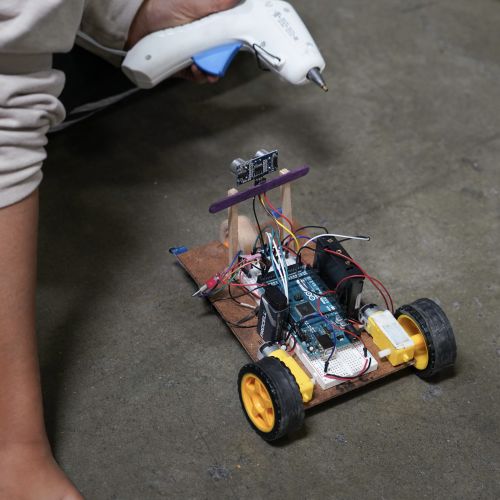
Learn to program an Arduino Microcontroller to turn commands into actions! Arduino is an open-source electronics platform based on flexible, easy-to-use hardware and software. Youth can program their creations to sense and act in the real world using motors, lights, or sounds. An Arduino board and accessories are provided. Students take home all components that are part of their final project.
Youth Electronics Immersion (ages 12-18)
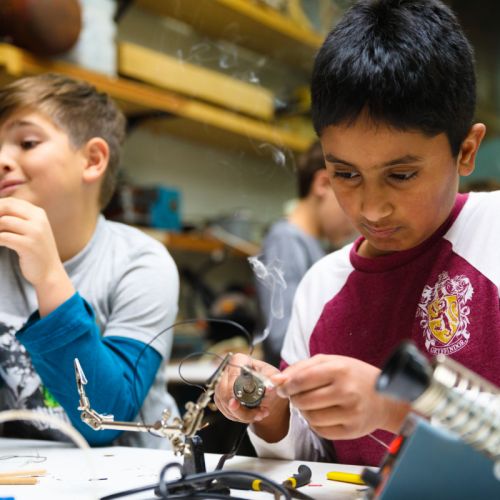
Dive deep in this continuing level youth workshop. Students take an immersive step into weeklong study, becoming young makers along the way. We will construct mini-sumobots, small robots that can seek out their opponents and push them out of the competition ring. Students learn to build circuits by identifying components, assembling a circuit board, and soldering parts together. We will build the chassis of our sumobots with simple materials, adding motors and sensors to help the bots move and navigate. The week will culminate with a showdown where students can pit their bots against each other!
PREREQUISITE: Youth Gizmos, Youth Robotics, or Youth Arduino Microcontrollers
Youth Electronics Weekend (ages 12-18)
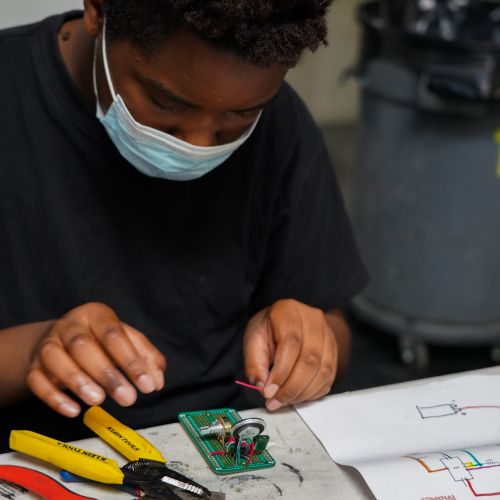
Build a simple remote-controlled robot. From the wheels up, you will create your robot’s shape and personality from salvaged components, mechanisms, and electrical components. Learn soldering, mechanical construction techniques, and how to remove and repurpose these items.
Youth Gizmos (ages 8-11)
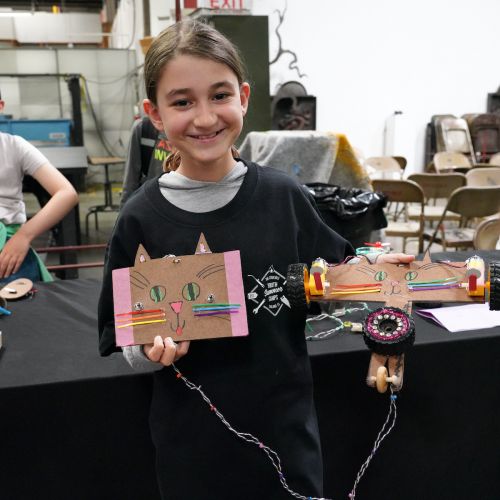
Learn kinetic techniques to design, engineer, and construct a mechanical sculpture, contraption, or gadget with lights and moving parts. Using new and salvaged components, you will learn how motors, lights, and switches work, how to create mechanical structures, how to create different types of motion, and how to incorporate switches to operate your very own fantastical contraption!
Meet The Kinetics & Electronics Department Head: Christopher Harris
Christopher Harris has been an Electronics Technologist for over 20 years, focusing on the conjunction of LED lighting technology and light art. “Electronics is my passion. Art is my hobby. Teaching is my joy,” Christopher shared with us.
Being Prepared For Your Kinetics & Electronics Class
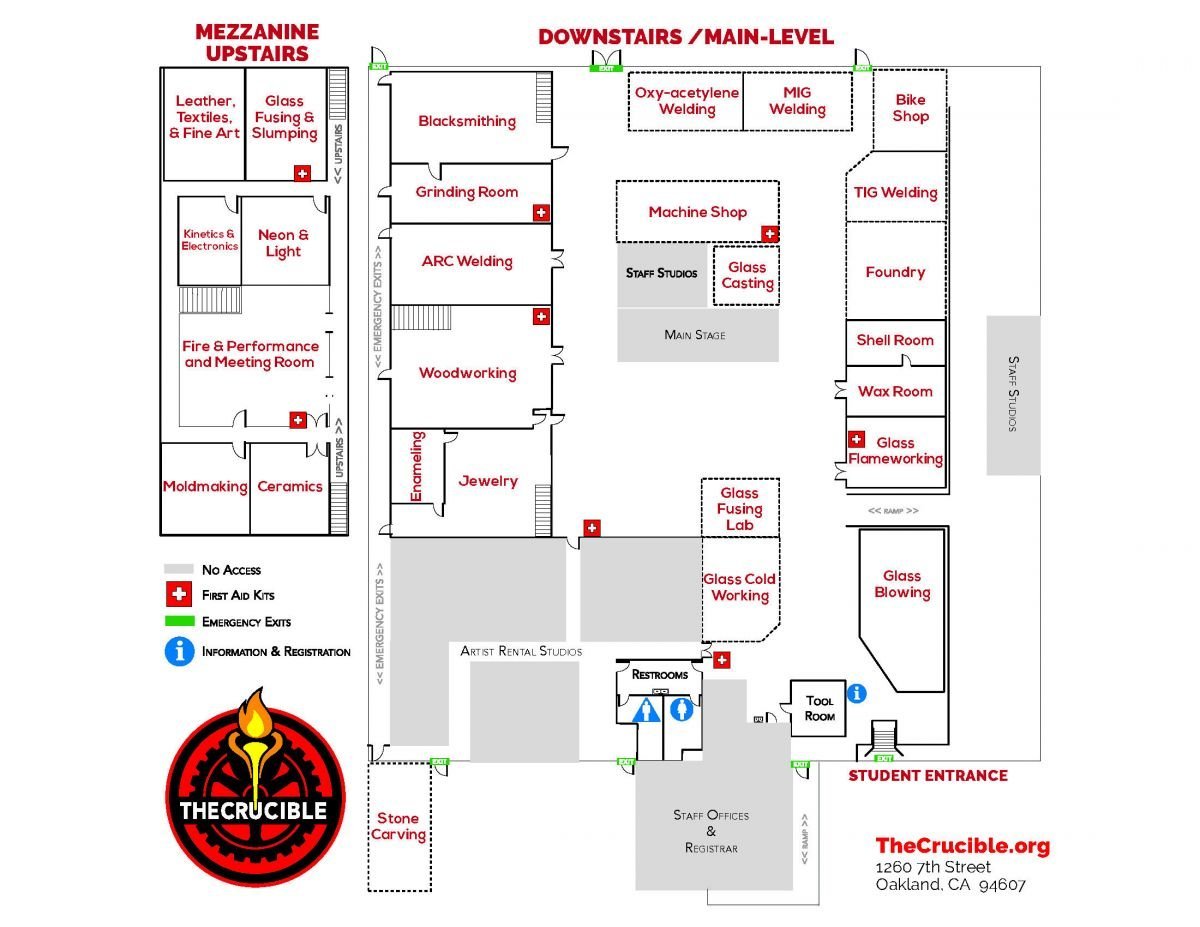
Kinetics & Electronics classes are held on the second floor of our building. Please contact us if you have any questions about accessibility and we will be happy to accommodate.
Students must arrive for class in all-natural fiber clothing, long pants, and closed-toe, closed-heel shoes with socks that protect up to the ankle. Long hair must be tied back. Nylon, polyester, spandex, or other synthetics are not allowed around machines, equipment, or processes that can produce hot fragments, sparks, or flames.
The Crucible requests students always arrive in studio safe clothing when working. Layers are encouraged as the studio can be very cold or very hot.